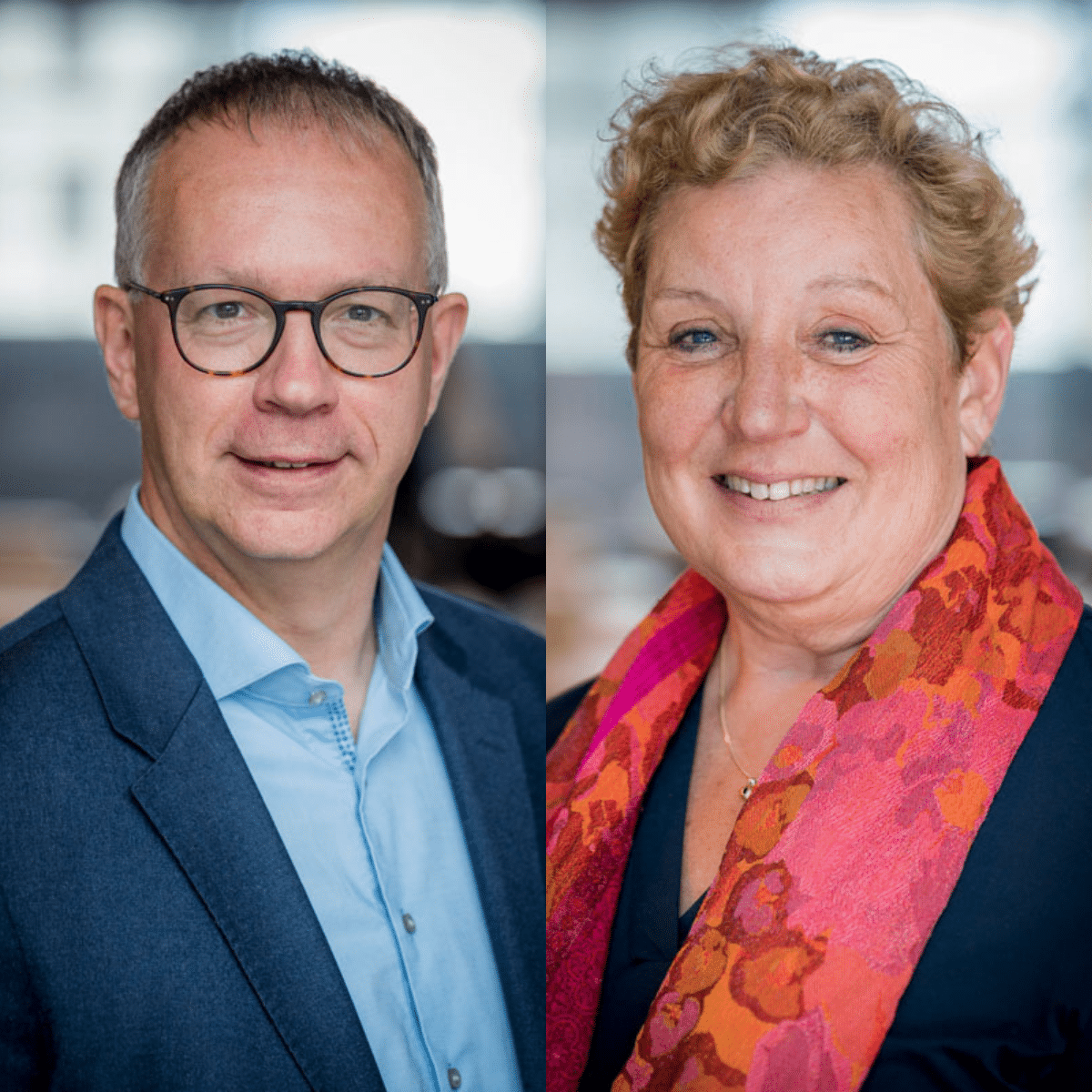
"Connekt possesses knowledge and expertise that we lack"
The logistics sector in the Netherlands is world-class. However, to maintain that position, you must constantly reinvent yourself, says Zeillemaker. “That requires solid interaction between the sector, government, and science.” These parties come together at Connekt. Zeillemaker describes Connekt using the words interactive, innovative, and implementation. Gijsbers uses the words: connecting, innovative, and future-oriented.

Changes
The entire world around us has changed enormously over the last 10 years. The logistics sector is also dealing with this. “In the past, there was no attention at all to sustainability,” says Gijsbers. Meanwhile, complying with the Paris Climate Agreement is now one of the biggest challenges. The same applies to the theme of digitalization. “Logistics is a sector that was quite conservative, so digitalization was something that received little to no attention ten years ago.” Another change is the rise of e-commerce. “That is an enormous logistical puzzle that is completely new compared to twenty years ago,” says Gijsbers. Colleague Zeillemaker illustrates this: “In the past, a container would arrive containing, for example, only clothing ordered by one company. That meant one customs declaration. Nowadays, everyone orders for themselves via AliBaba and similar sites; so there are potentially thousands of declarations in a single container.”
Perception of roles
The ministry's perception of its own role has also changed over time, Zeillemaker explains. “We have started working much more in networks to get things done, instead of only working with rules and subsidies.” It is difficult for the ministry to maintain contact with all parties in practice. “An organization like Connekt is very capable of establishing that connection. It is a vehicle for functioning as a government within a network of knowledge institutions and companies under a neutral organization. Furthermore, a different kind of knowledge and expertise is present within Connekt than within the ministry. We are more about policy; people at Connekt have a better understanding of what is happening within companies and what is needed; they can quickly deploy things in the market and know how the rules work regarding tenders. I think that we, as a civil service organization, are less adept at that game.”
Challenges
Sustainability and digitalization are examples of challenges the sector is currently facing. Just like resilience and the tightness of the labor market. “In the trucking sector, for example, many drivers come from Eastern Europe,” says Gijsbers. “Should a war break out there, they will all be called up to go and fight at home. Then we will have few drivers left here.”
Cyber is also a new challenge, Zeillemaker states. “Digitalization offers many opportunities, but at the same time, you see all kinds of misery on a large scale. A few years ago, a terminal in the Port of Rotterdam was closed for a while due to a cyberattack. As a result, they suffered significant losses. That was a wake-up call for the entire business community.”
No peace
“At the moment, something happens somewhere every day,” says Gijsbers. “In the current era, we are not at war, but it is no longer peace either.” For logistics, this also means they must prepare and become more resilient. Zeillemaker: “If we enter a (pre-)war situation, the question is also: what happens next to the entire logistics system? All kinds of military flows must then pass through the Netherlands to the potential flashpoint. With which trucks and which trains? Will that interfere with rail passenger transport or not? These are all logistical matters that need to be considered. I think that in the coming years, military mobility and resilience will certainly be very central topics.”
Circular economy
The circular economy will also become an important theme. Gijsbers: “Where we currently import raw materials, you must work increasingly in a circular way: taking products apart, reusing them. This will also result in completely different flows of goods for logistics. Quite a bit will change there as well.”
AI
Zeillemaker believes that AI is also an important theme. “AI is still in its infancy and is going to change an enormous amount in logistics. The expectation is that at some point there will be a kind of digital twin of the entire logistics chain, in which the container might choose its own route. This could mean a lot for the nature and scale of work at logistics companies. The exact consequences of AI are currently difficult to estimate, but it is crystal clear to me that much will change.”