"I expect the BDI to become a standard"
Nico Anten has been working at Connekt for 25 years. He can therefore tell you a lot about the organization. At the moment, within Connekt, he is mainly involved with Lean & Green International and EDIC. He tells us more about these initiatives.
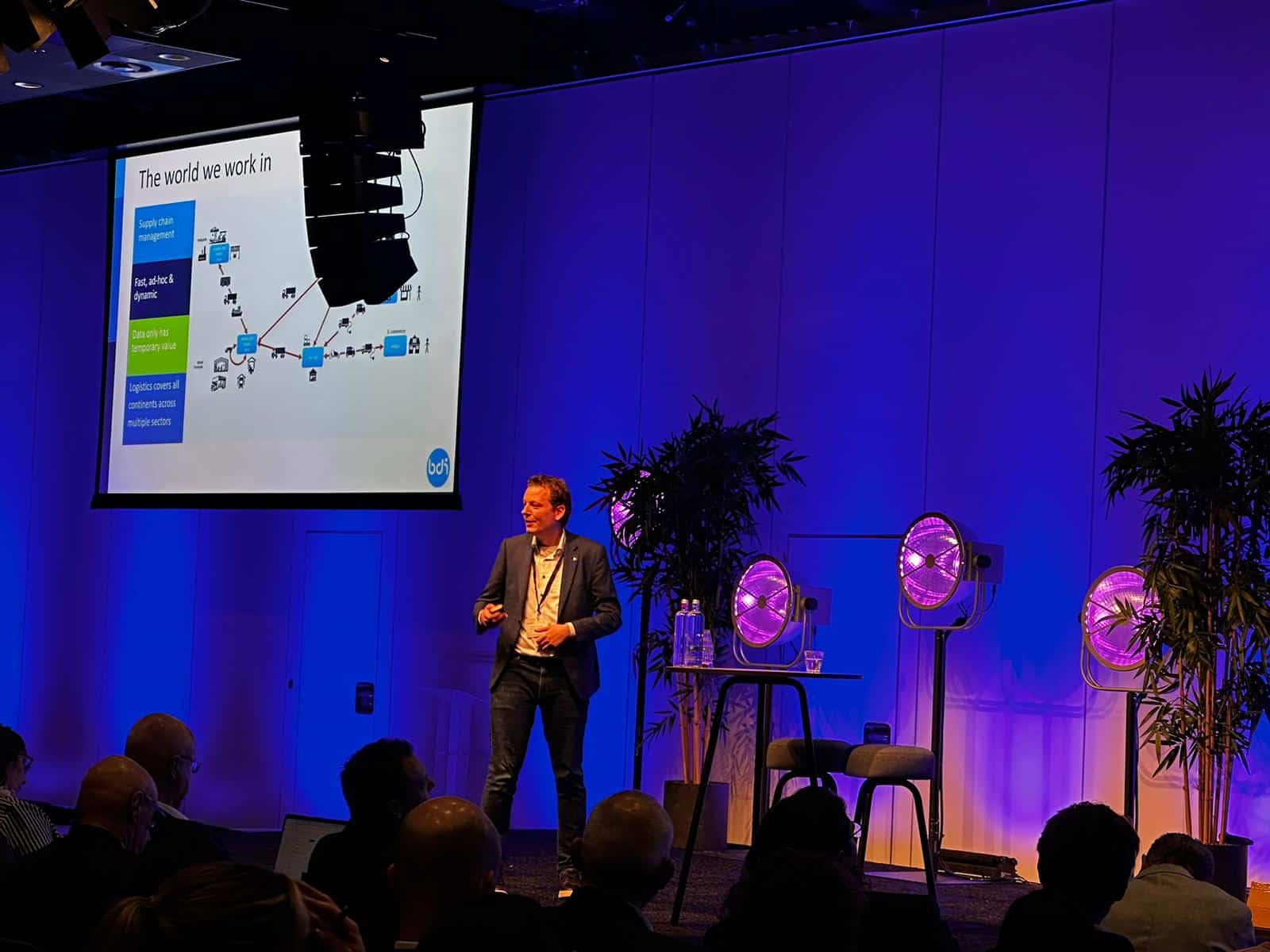
Within Connekt, work is being done on the Basic Data Infrastructure (BDI). This is a framework of agreements within logistics for the collective exchange of data. Steven Schouten, BDI product owner, tells us more about his work at Connekt and the Basic Data Infrastructure.

When asked which three words he would use to describe Connekt, Steven Schouten answers: network, connector, and innovative. Steven has been working at Connekt since July 2023. He remembers his first day well: “My first day was not at the Connekt office; instead, I was immediately taken to Brussels to attend a conference. It is special that this is possible here, which is great. You immediately know what kind of organization Connekt is.”
BDI
As BDI product owner, Steven is involved in the development of the Basic Data Infrastructure. This framework of agreements is applied within the Digital Infrastructure Logistics (DIL) program. Connekt carries out this program on behalf of the Ministry of Infrastructure and Water Management. Within DIL, companies and governments work together to conduct digital and automated business efficiently, safely, and securely via the BDI. The goal is for logistics chains to collaborate more effectively, Steven explains. “To ensure the logistics process runs smoothly, the exchange of information is of crucial importance. In the dynamic world of logistics, information exchange can often be challenging.” Steven explains that sharing data within the context of a chain significantly improves coordination between the parties involved. For instance, disruptions at the start of a chain can be better managed by parties at the end of the chain. The BDI makes it possible to work safely and securely with your chain partners for a more effective and efficient logistics process.
BDI is an example of federated data sharing, where the data owner remains in control of their own data. In this way, the BDI ensures that only authorized parties have access to the data they are entitled to within the context of the physical logistics process.
Adoption of the BDI
Steven indicates that there are now many new initiatives surrounding data exchange, but the strength of the BDI lies precisely in the collective approach. “We see that companies often struggle with the pace of digitalization and the number of initiatives. That can have a paralyzing effect,” he says. In this respect, the BDI provides guidance because it is not only technical in nature but is primarily focused on collaboration and agreements. “The challenge lies not just in the technology, but in doing it together. Only then does it truly become valuable for everyone in the chain.” That value is now becoming visible in various living labs where governments and companies are already collaborating based on the BDI. In these practical environments, it is demonstrated that sharing data according to the agreements actually leads to more insight, better coordination, and more efficient processes. Steven emphasizes that the future-proofing of the BDI also lies in its alignment with European laws and regulations. Consider the Data Act, which calls for more control over data. “The framework of agreements is prepared for this. We are creating an infrastructure that is agile enough to move with these developments.” According to Steven, the key to successful adoption lies in concrete applications: “We need to make it simple to participate. If companies experience that it works and that they benefit from it, the rest will follow naturally.”
The future
Steven envisions the future of BDI in the same way that digital money transfers work today. “When we transfer money to each other, we use the bank's Swift system. That is the framework for transferring money. As a user, you don't need to know anything else about that framework. For BDI, this means that as a regular haulier, you don't need to know that a wonderful system called BDI exists, but you do know for sure that if you share data with another organization, it is done correctly and handled properly by your IT provider. And that IT provider will ensure they are properly connected to that framework. I expect it to become a standard: it's just there, we assume it exists and works, and you can trust that it is secure.”
Would you like to know more about Connekt's 25th anniversary?
Then visit our special theme page 25 years of Connekt!