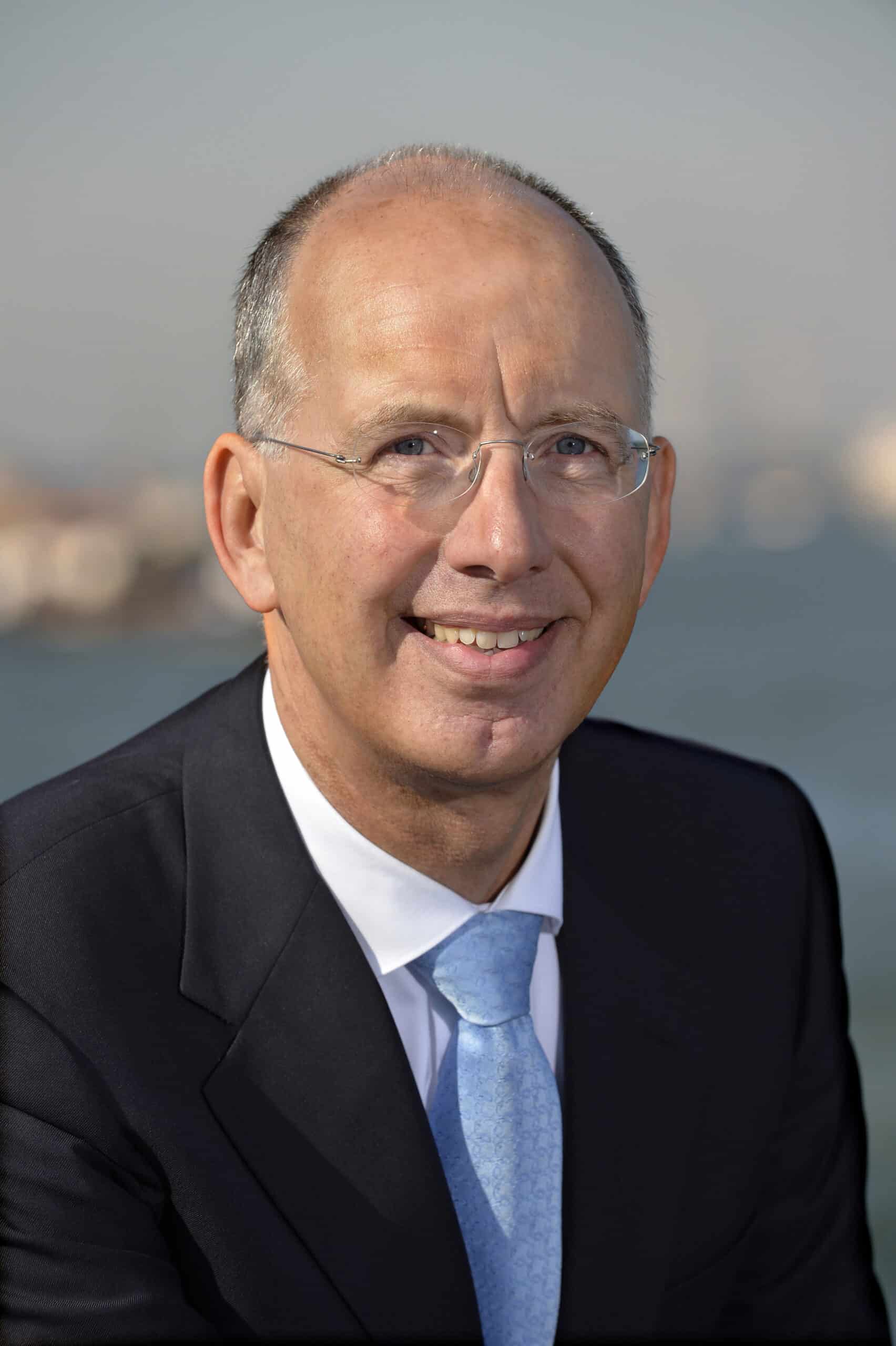
"No prosperity without logistics"
Ronald Paul, chairman of the Top Sector Logistics, states that "Without logistics, there is no prosperity." Although the sector is crucial, Paul is seriously concerned about increasing congestion. The Top Sector, with innovation partner Connekt, focuses on digitalization and efficiency through four steering groups. Paul emphasizes that the Netherlands must remain a 'frontrunner' by sharing and standardizing data. To combat congestion, he advocates for more efficient use of infrastructure and moving away from the 9-to-5 mentality, for example by keeping warehouses open longer for trucks. Logistics makes an enormous contribution to our well-being, and therefore the sector must work harder to demonstrate its importance, despite the current political climate.
Ronald Paul is chairman of the Top Sector Logistics. He speaks about success stories and his concerns within the sector. “My concern is increasing congestion. We will have to do something to solve this.”
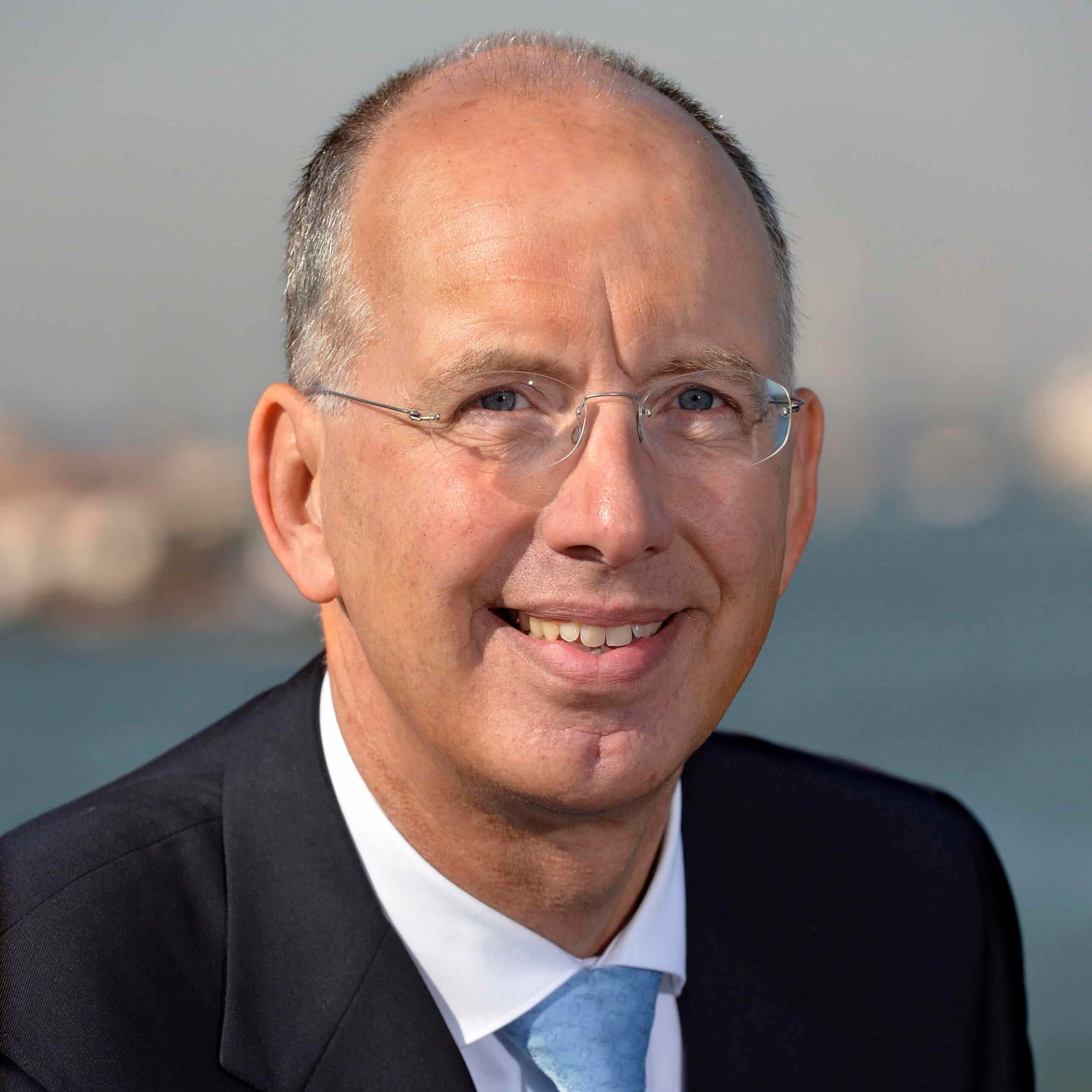
Ronald Paul has been chairman of the Top Sector Logistics since January 2024. The Top Sector Logistics is supported by two organizations, namely TKI Dinalog and Connekt. TKI Dinalog handles the research calls and Connekt manages the implementation and scaling up to practical application and the business community, according to Paul. The Top Sector operates with four steering groups. The Multimodal Freight Transport steering group examines how, for example, goods flows can be organized as efficiently and sustainably as possible. The Supply Chains steering group focuses on optimizing the supply chain and digitalization. The third steering group is Mobile Equipment and Construction Logistics. More than a quarter of transport in major cities is construction-related. The fourth steering group deals with urban logistics, such as zero-emission zones. All steering groups have their own programs.
Ronald Paul describes Connekt with the keywords: connector, innovation, and impact. “Because Connekt scales up our innovation work and places it within the business community, we have a lot of impact and it doesn't just remain a desk study.” In short: without Connekt, it won't work.
Data sharing
From 2012 to 2020, Paul was Chief Operating Officer (COO) of the Port of Rotterdam Authority. He was already working with Connekt then, in the Steering Group of the Neutral Logistics Information Platform (NLIP). At that time, people still thought very much in silos; there was little focus on the broader picture, says Paul. “There was much more resistance to sharing data.” According to Paul, there is now more acceptance in that area. “People see that by sharing data, you can also share benefits. Otherwise, you have no advantage at all. Logistics in the Netherlands has certainly changed in that regard.”
In terms of digitalization, the Netherlands was a leader for many years. “Now the Netherlands must remain alert to stay a frontrunner. Otherwise, we will be overtaken on all sides by other European countries and by European laws and regulations.”
According to Paul, at that time it was primarily about improving efficiency and flexibility in the sector using digitalization. “Everything had to be lean & mean. You started with a few large parties and then you forced the rest to follow.” Now it is much more about establishing something that is applicable to everyone in the logistics chain through standardization. “That is a different way of thinking. It requires more coordination, but it is necessary.”
Collaboration
Within Connekt, various parties work together on innovation and accessibility. Paul cites the Trust Chain in the ports of Rotterdam for the Digital Infrastructure Logistics program as a good example. Within this partnership between government and the business community, the safe and reliable release and collection of import containers was a central focus. “Systems have been set up in which various parties, such as customs, the safety region, the municipality, and companies, work together to combat subversion. I think that is a great success where parties were able to link all available data very quickly and successfully."
Congestion
Paul is positive about the future of the sector, “because without logistics, there is no prosperity”. He is, however, concerned about the increasing level of congestion and how to keep it manageable. “If that fails, transport becomes expensive. We will then notice that in the shops.”
According to him, the solution lies in spreading. “We all know that no new infrastructure will be added in the short term, so we must use existing infrastructure more efficiently.” This spreading must be sought in both commuting and logistical road traffic. "In terms of logistics, we need to get rid of the 9-to-5 mentality. Warehouses should really be open until nine o'clock in the evening for trucks. If warehouses close at five in the afternoon, trucks are forced to drive in traffic jams. Agreements should already be made about this by local officials when issuing permits for the construction of a warehouse.”
Pride
According to Paul, people were quite proud of the Netherlands' logistical position over the past 25 years, but there is little sign of that in the current political climate. “That means Connekt now has to work harder to demonstrate that logistics and innovation are important. We have to work harder to achieve things.”
Paul himself is still proud of the sector. “Logistics makes an enormous contribution to our prosperity and our well-being. For people in the Netherlands, it is a given that everything is there when they go to the shop. And a given that when they order something via e-commerce, it is delivered within two days. You only start to miss those kinds of certainties when they are no longer there.”
Would you like to know more about Connekt's 25th anniversary?
Then visit our special theme page 25 years of Connekt!