Theme under exploration - Organizing differently
In the past, our accessibility challenges have often been approached from the perspective of mobility supply. Initially, the focus was primarily on 'more' infrastructure (roads, rail, etc.); for a long time now, it has been directed towards making vehicles cleaner, systems smarter, and services better. This remains important. At the same time, there is a growing realization that accessibility is not only determined by mobility itself, but also by the way we have designed public spaces and how work, education, healthcare, and other facilities are organized.
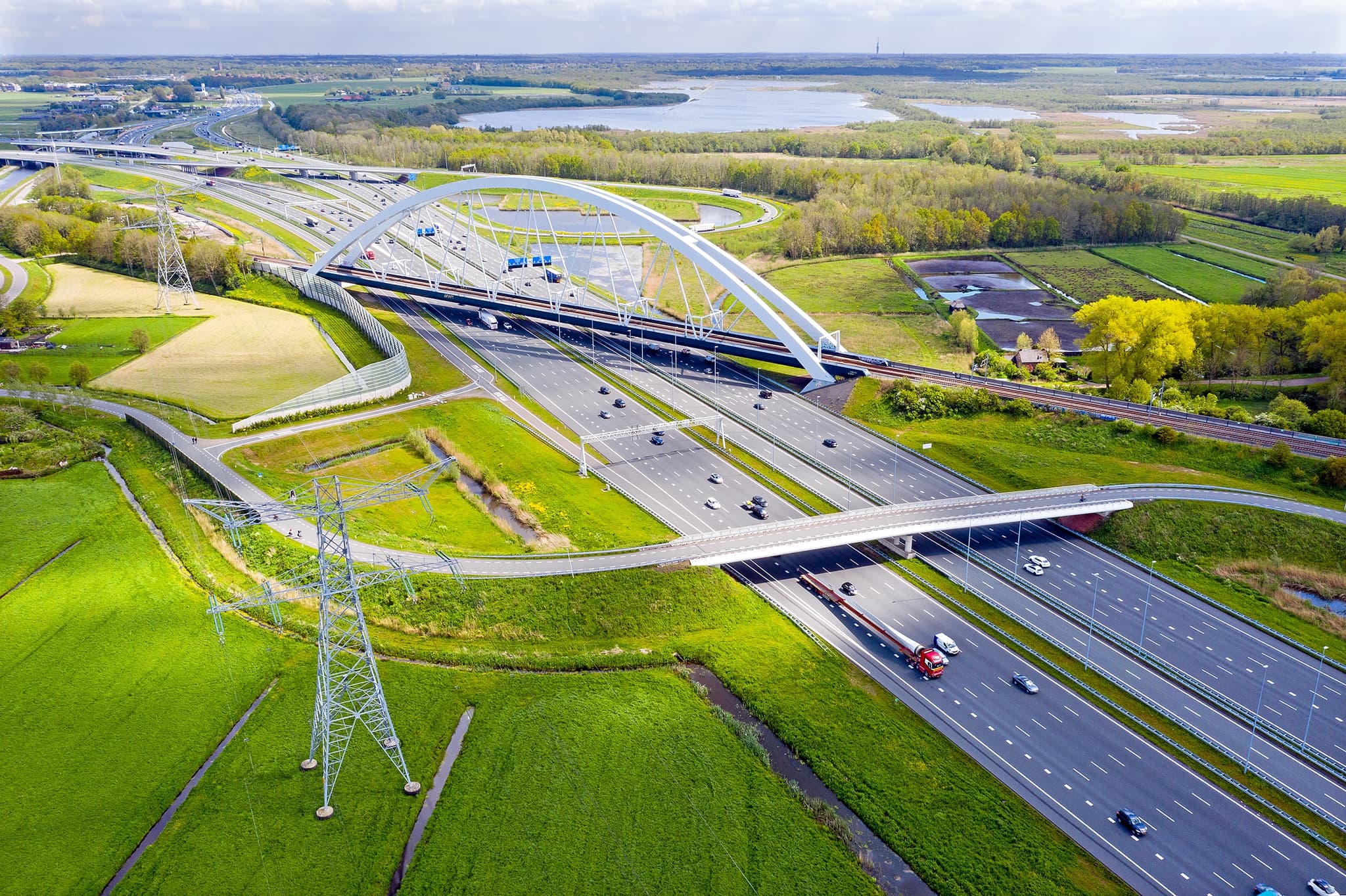
Within the theme 'Organizing differently', we explore how accessibility can be improved by organizing facilities more intelligently. How do we prevent unnecessary travel, reduce distances, or make journeys simpler? Consider healthcare institutions that take into account how a patient travels to the hospital when scheduling appointments, GPs who better distribute patients based on proximity, or employers who look at how work can be organized closer to where employees live.
Initial analyses show that, despite limited research, there is potential in these types of solutions. We often still know too little about such measures and their contribution to accessibility, the costs, and any organizational, legal, or practical barriers. It is therefore important to explore these solution directions concretely and make them more transparent.
This theme emphatically touches on more than just mobility. To advance promising solutions, it is necessary for us to broaden our network and engage in dialogue with parties from, for example, healthcare, education, the labor market, and spatial development. In doing so, we always seek a connection with their challenges. After all, solutions are stronger when they contribute to fewer or smarter movements and help achieve socio-societal goals. Such as filling vacancies, keeping healthcare accessible, or keeping a school running.
Connekt is working on a systems approach for this. Around a concrete issue, we map out the parties, choices, incentives, and boundary conditions that influence behavior and accessibility. What does the customer journey look like for different types of travelers? What choices do people and organizations make? And how can we organize solutions so that they involve less hassle and become more attractive to implement?
In the coming months, Connekt, together with the Ministry of Infrastructure and Water Management, CROW, MRDH, and SmartwayZ.NL, will explore the potential of organizing differently in concrete cases. In doing so, we want to better understand which solutions are promising, what is needed to apply them, and how they can contribute to an accessible, sustainable, and livable mobility system.
Involved members
Capgemini, CROW, Ministry of I, MRDH, SmartwayZ.NL, MobilityLabel.