Time to give interaction between travelers a greater role in our mobility!
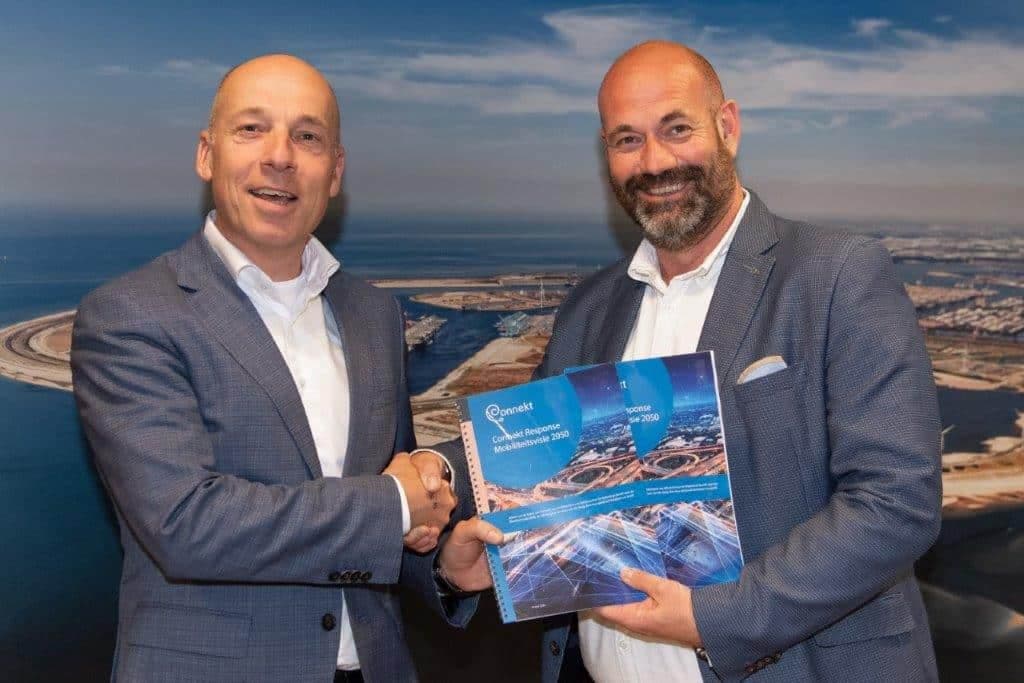
Sybe Andringa: "Because individual freedom is highly valued, we try to achieve the impossible: giving everyone access to all mobility facilities at any given time. From this mindset, the focus over the past decades has been on increasing supply – more infrastructure, better connections, and faster routes. Recently, there has been an increasing focus on the demand side of mobility, and interaction between travelers can play an important role in this. In this article, I explain how."

The need for different travel choices
More asphalt and rails are often not sustainable solutions: expanding this infrastructure often leads to increased use and therefore offers no solution for growing demand. Because lack of space, nitrogen issues, and climate goals mean we cannot build indefinitely, the only way forward is to do more with existing resources. This requires a fresh perspective on mobility. The 2050 Mobility Vision of the Ministry of Infrastructure and Water Management also confirms this. Solving mobility challenges is no longer a matter of 'more', but of making smarter use of what we have. Mobility thus becomes a behavioral issue: how do we encourage people to make alternative choices? And at the same time, it becomes an organizational issue: how do we design our society so that people are actually able to make those choices?"
That is easier said than done. People are creatures of habit, and the fixed structures in education and work often leave little room to spread travel times or choose other modes of transport. However, for a portion of travelers, that flexibility does exist, and it is precisely there that an opportunity lies which we are currently largely leaving untapped. Often, this group simply does not know what is expected of them and lacks sufficient information about their options.
Imagine if travelers had the opportunity to coordinate their travel movements with one another. If they had insight into the effect of their travel movement on others, what alternatives are available, and if they were encouraged to utilize them. Then the limited capacity could be distributed fairly among those who truly need it.
Lack of interaction
In small, close-knit groups, coordination happens almost naturally. Housemates divide chores among themselves, friends decide who the designated driver is for a night out, and sports teams take turns washing the team shirts. Despite scarcity – whether it concerns time, resources, or simply motivation – informal agreements and unwritten rules ensure that the burdens are shared fairly. This creates a system in which everyone takes each other into account and works together.
But as soon as we step out of those small groups and become part of the large mobility system, that mutual understanding and cooperation seem to disappear. Mobility then becomes a matter of 'every man for himself'. People primarily make choices based on their own convenience, without considering the effect on others in traffic. This leads to situations where scarcity is unnecessarily exacerbated because everyone wants to use the same mobility facilities at the same time.
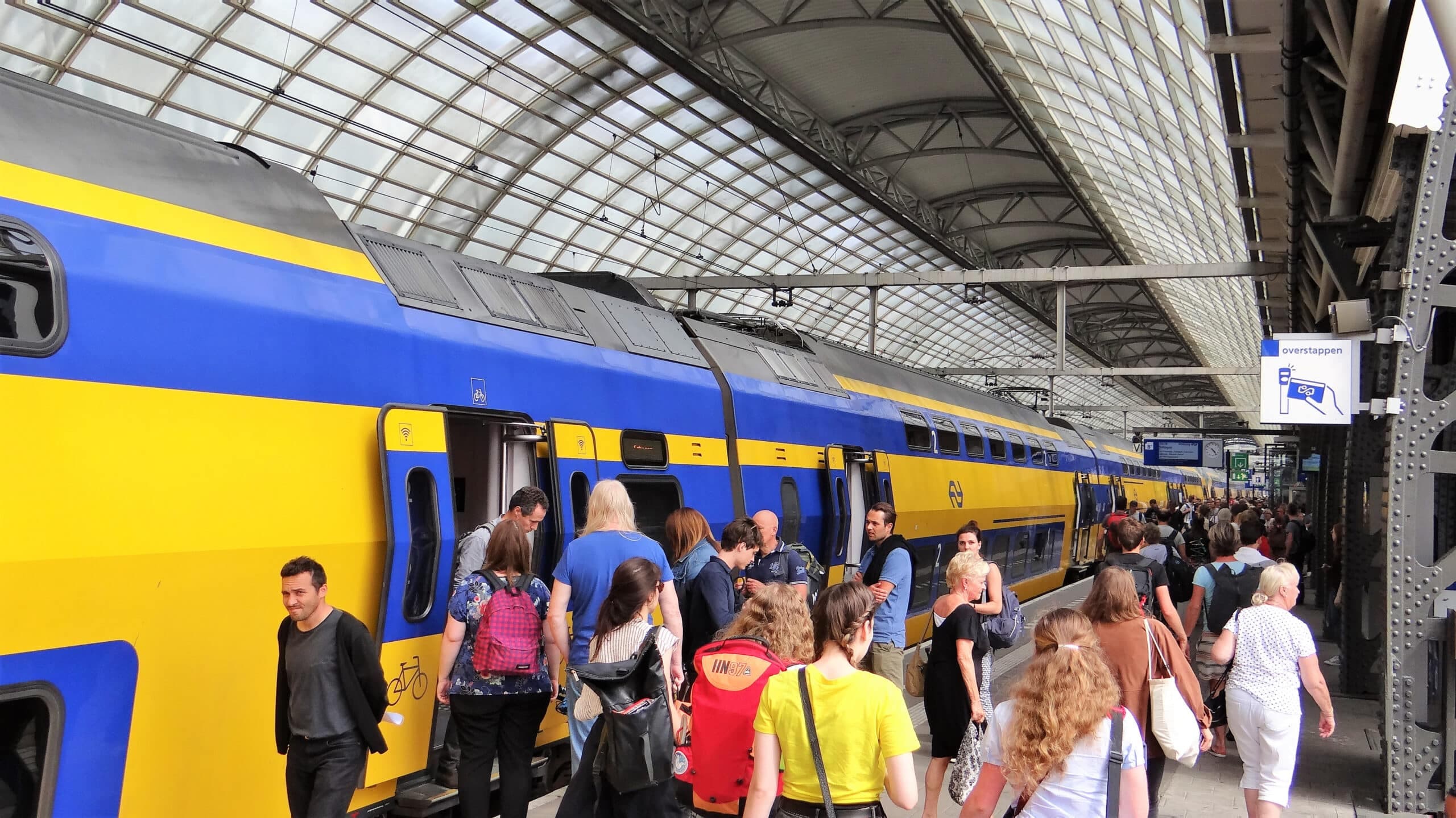
Take, for example, the car or public transport traveler who relies on navigation apps. These indicate an optimal departure time and route for the individual user. Both the NS app and navigation apps for motorists do provide insight into expected crowds, but they offer no suggestion for how you could help other travelers by making different choices. Because this interaction between travelers is missing, no one will simply adjust their route, departure time, or mode of transport, even if that would not be a problem for that traveler.
The same applies to parking: a motorist often drives to a popular destination first and only then looks for the nearest parking space. Coordinating in advance with other visitors about who can best park where hardly ever happens. The result: visitors park as close as possible, even if they could have walked a bit further. The resulting search by other visitors for a free spot causes extra traffic congestion and unnecessary emissions.
A final example concerns sustainable travel choices. Scarcity in CO2 emissions is less tangible and is therefore imposed through reduction targets. Travelers must collectively achieve those targets. Yet they generally have no idea to what extent their travel choices are or are not in line with this, and what that means for how much others can still emit. They are therefore hardly challenged to make more sustainable choices – traveling not at all, less, or differently – even if that would not be a problem for that traveler.
In all these examples, the following applies: due to the lack of insight and interaction between travelers, we do not optimally utilize the limited space and resources in the mobility system.
Engagement spaces
What if we could scale up the model of small group agreements? What if travelers could coordinate decisions with each other, even though they don't know one another? In science, this idea is called 'engagement spaces' – physical or digital spaces where people come to the best choices together through fixed rules of the game. Interaction is facilitated within these engagement spaces. Travelers then understand how sought-after a scarce facility is and are encouraged to be flexible and accommodate one another.
For large groups of travelers who normally do not speak to each other, a digital solution is the obvious choice. Let's go back to the previously mentioned examples.
Imagine: a navigation app that not only shows you the ideal route and departure time, but also an alternative route or departure time where you can see how many other travelers would benefit if you chose it.
Or think of a parking app that provides advance insight into available parking spaces, where visitors can indicate their preferences and even exchange spots with each other. A disabled person parks closer, while someone who doesn't mind walking parks a bit further away.
Engagement spaces can also be a solution for more sustainable travel choices. Perhaps starting in smaller groups – for example, employees of a company – the mutual exchange of a "CO2 budget" could be a way to achieve jointly agreed CO2 targets.
In this way, coordination between strangers becomes possible and travelers are given the opportunity to use the mobility system more efficiently and sustainably. This sometimes also yields benefits for the individual traveler. Sometimes a different route, departure time, mode of transport, or parking space results in a more comfortable, faster, or healthier journey. In other cases, this is not the case, and an extra nudge will be needed to encourage people to accommodate others.
Increasing the goodwill factor
Because social norms are less powerful when people do not know each other, an extra incentive may be needed to increase the goodwill factor. A reward system could help with this. For instance, gamification elements such as scores, animations, or sounds could contribute to the experience and give travelers that extra push to accommodate someone else. But the question is whether this is sufficient in itself to achieve behavioral change.
A financial reward could also be an option. A well-known example of this is a congestion charge or off-peak discount. That example shows that financial incentives often meet with a lot of resistance. Travelers experience this as a restriction of their freedom. It also feels unfair to individuals who must travel at a certain time or location, especially if they have a tight budget. Wealthy travelers can pay more for priority in using scarce facilities, which leads to inequality.
An alternative and fairer system is the use of tokens within a closed ecosystem. These tokens would be awarded to travelers who accommodate others – for example, a closer parking spot, a more optimal route, or a popular charging station. Travelers can exchange their collected tokens at a later time for priority in using facilities. Or they can use them for related benefits, such as priority at a smart traffic light, a discount on a charging session, or even a cup of coffee at the destination.
For such a token system to work properly, a managing party would be needed to set the rules and a party to keep the records. A party would also need to be able to impose sanctions if someone does not follow the rules. This keeps the system fair and attractive for everyone.
A well-thought-out approach is necessary
Of course, reality is often more complex than theory, and a well-thought-out approach is therefore required. The system must be 'foolproof', so that a traveler does not receive tokens for a choice that does not contribute to the fair and effective distribution of road, public transport, parking, charging, or CO2 capacity. It must also be able to handle different traveler needs. Think of disabled travelers who need extra parking priority or commuters who, due to their working hours, have little freedom of choice to travel outside of peak hours. Furthermore, price incentives often already exist in the examples mentioned – for example, a higher rate for more attractive parking spaces. So it will have to be carefully examined how a token system can complement or replace these.
Therefore, such a system must be extensively tested and simulated before it can be put into use. At Connekt, we see a lot of potential in engagement spaces and want to go a step further to make this ambition a reality. In the coming period, we will continue our efforts to discover the possibilities of smart coordination and interaction. To this end, we are looking for a group of Connekt members who want to experience and enrich this concept together. Together, we can bring this innovative idea closer to practice – and thereby achieve more efficient, fairer, and more sustainable mobility for everyone.
Would you like to contribute your thoughts on this? Then please contact me via the email address below!
Connekt is celebrating its 25th anniversary this year! Would you like to know more about this?
Then visit our special theme page 25 years of Connekt!