‘We must ensure that our logistics parties start sharing data’
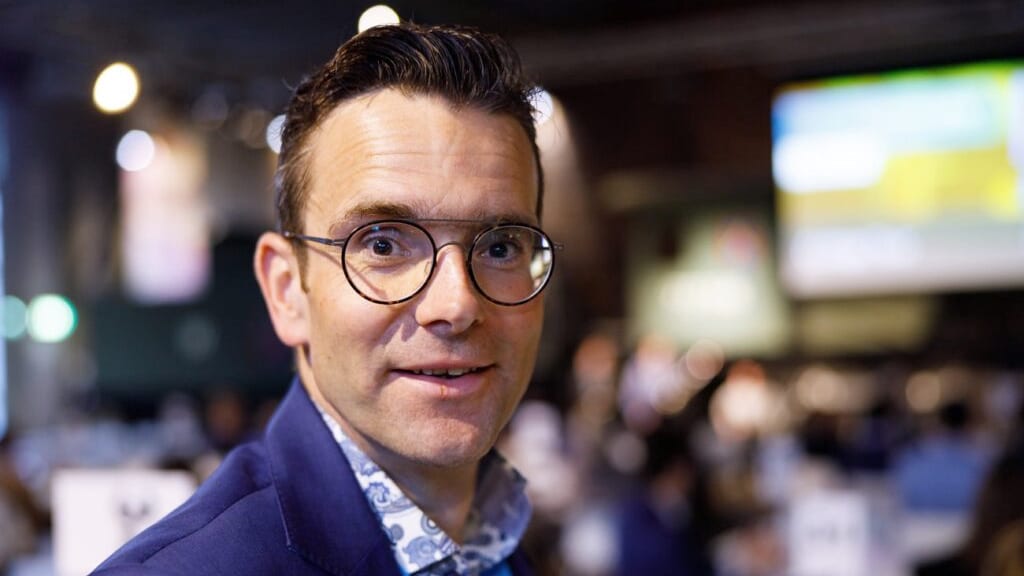
Sjoerd Boot, cluster coordinator for digital transport at the Ministry of Infrastructure and Water Management, emphasizes the urgent need for the Dutch logistics sector to transition to data sharing. He is responsible for the Digital Infrastructure Logistics (DIL) program and works in collaboration with Connekt. According to Boot, the position of the Dutch logistics chain is under pressure from foreign parties that are much more digitally proficient. He states that the government must invest to kickstart the process and thus help the sector remain competitive.
On behalf of the Ministry of Infrastructure and Water Management, Connekt carries out various programs, such as Digital Infrastructure Logistics (DIL). Sjoerd Boot, cluster coordinator for digital transport at the ministry: “Connekt is more than capable of helping us achieve our goals.”

Sjoerd Boot describes Connekt as decisive, connecting, and proactive. “Connekt is truly capable of achieving results by bringing innovations into practice together with companies. They ensure that something is actually done. Because so much happens in that ‘Delft house,’ people find each other very quickly, creating connections between the various projects and programs. Through this connection, Connekt can also be proactive toward the ministry.”
Boot is very positive about Connekt, but in his view, the organization can become even more powerful if there is even more cross-pollination between the member organization and the programs Connekt executes for the government. “I would say: work with the members and the ministry toward a concrete goal in this area, and then that machine will become even more powerful.”
Digital transition
The Dutch transport sector must make the transition to digital. In the past, digitalization was seen as the digitizing of documents. For example, the digital consignment note in road transport. During that wave of digitalization, a digital representation of a paper document was created. But we must move toward a fundamentally different way of digitalization. “Not just looking at a digital document, but looking from the perspective of the data that the document generates, and being able to share that with parties you don't even know.”
A living lab is currently under development within the DIL program: Connected Trade Network; here, all data regarding the sea container is shared, not only within the Port of Rotterdam but also with many parties in the hinterland. “Only when everyone has the same data at the same time can they truly make a supply chain more efficient. And opt for other modalities instead of the truck.”
Dutch position under pressure
The digital transition must happen quickly. “Our logistics chain is world-class, but our position is under pressure. “Parties that have no understanding of logistics, but are very well organized digitally, can control the entire supply chain.” Shippers are already being approached by parties that can take everything off their hands digitally, says Boot. These parties ensure that a container sealed in China plans its own way through the logistics process. They no longer need people for that; it is all done machine-to-machine with data. These parties create closed systems in which our logistics entrepreneurs are often unable to participate. And that harms their position. “The traditional role our logistics parties have in directing such a logistics chain is being enormously eroded. Driving from Rotterdam to a distribution center remains the only task left.” And that is dangerous for our economy. “We must therefore ensure as quickly as possible that our logistics parties are just as digitally proficient as those large foreign parties. We are also working on that together with Connekt.”
The logistics sector consists of many relatively small family businesses. “They are not data-oriented and need help to become digitally proficient.” But in addition to skills, the right products are also important. “Companies must be able to buy products to collaborate digitally in a different way with the parties in their chain.”
Ensuring that logistics chain partners actually start sharing data with each other is currently a task that only the government can take on. “Everyone in the supply chain must participate. There is no single party that can reap all the benefits alone. That is why the government is now stepping forward and investing heavily. Until the flywheel is turning.” The DIL program ends in 2027 and will then have to stand on its own feet. Connekt is helping well with that. “We want the flywheel to be turning by then in such a way that parties will invest in it themselves and parties will join. So that there is adoption and scaling up.”
International level
“We want our way of working to be included in the European standard,” says Boot. “We are currently working on that with Connekt and a few other countries. Steps are also being taken at a global level. “We want to supplement existing standards in multimodal global transport at a world level with the core elements that are missing there. Essential is the sharing of status messages in logistics, for example, ‘the container is on the quay.’ These are currently not standardized. There is a lot of calling, emailing, and faxing, and globally that causes an enormous amount of unnecessary errors. We want to provide those missing links to the standardization institutes in the world.” As a consumer, you can track your package exactly, but in the business market, you still cannot. If you standardize it on a global scale, you will achieve that.
Would you like to know more about Connekt's 25th anniversary?
Then visit our special theme page 25 years of Connekt!